Health insurance excess: is a higher amount worth the saving?
Compare the annual premium saving with the extra excess you could pay across everyone insured. The calculator shows the cost under three claim scenarios.
A higher health insurance excess can lower your premium, but means paying more towards an eligible claim. Compare the saving with the extra excess for everyone on the plan. Choose an amount you could afford when a bill arrives. A lower total yearly cost is not enough if you cannot pay the bill when it is due.
What is a health insurance excess?
A private health insurance excess is the amount you pay towards eligible treatment costs under your health insurance policy. Your insurance provider pays the remaining covered costs, subject to your policy terms and benefit limits.
In the individual Bupa, Aviva and WPA examples cited here, the general excess applies per person, per policy year. Some benefits have exceptions. Check your own policy documents: older plans and certain benefits may work differently.
The policy excess is not a limit on all your costs. You may still pay for excluded care, bills above a policy limit or a shortfall in a consultant’s fees. Paying the excess does not make an excluded treatment eligible for cover.
Is a higher excess worth it?
See whether a lower premium makes up for paying more when you claim. Compare two private medical insurance quotes with the same cover apart from the excess.
If you pay a monthly premium, calculate the full yearly cost of each option. Include any introductory discount or free months so the comparison reflects what you would actually pay.
A high excess may suit someone who can comfortably meet a larger bill. A low excess means a smaller contribution when eligible treatment is needed, but may cost more in regular payments. The saving needs to justify the extra amount you could pay.
Compare your two quotes
Replace the example figures with your quotes. Enter the yearly price for everyone covered and the excess per person. These starting figures are examples, not insurer prices.
This compares one policy year, assuming an annual excess per person and identical excesses for all members. It excludes future premium changes, no-claims discount effects and other benefit differences. “Claims” scenarios assume each claimant has enough eligible costs to pay the full selected excess. It does not estimate how likely anyone is to claim.
Worked example: a couple moving from £100 to £250
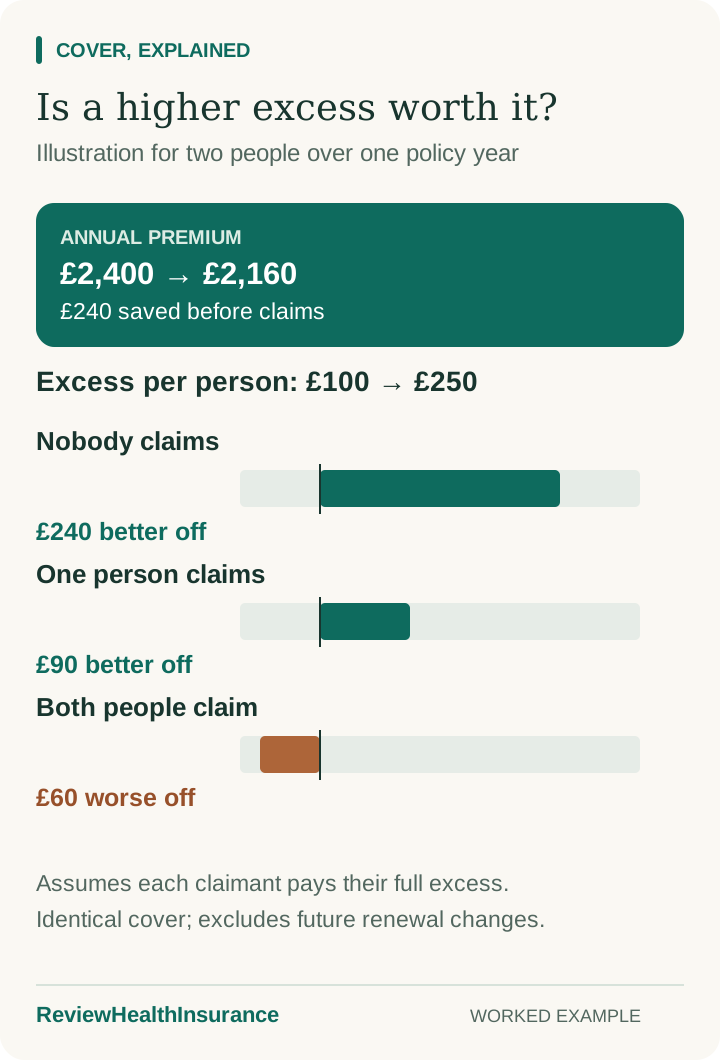
Suppose the combined annual premium falls from £2,400 to £2,160. The saving is £240. Each person's potential excess rises by £150.
| Scenario | Effect of the higher excess | Net position |
|---|---|---|
| Neither claims | No excess paid. | £240 better off. |
| One pays the full excess | £150 extra personal contribution. | £90 better off. |
| Both pay the full excess | £300 extra personal contribution. | £60 worse off. |
These are hypothetical quotes. The general calculation is: annual premium saving minus the extra excess paid. Smaller eligible bills may mean less than the full excess is used.
Why family policies need a household calculation
If each person has their own excess, multiply it by the number of people covered. This shows what the household might pay in excesses that year. With a £500 excess and four people, that could be £2,000. All four would need enough eligible costs to use their full excess.
That is a possible excess bill. It does not predict who will claim or cap all the costs you might pay. If your family’s needs differ, ask if each person can choose a different excess.
When comparing health insurance providers, check how the excess applies to each family member. A cheaper household quote with a high excess could leave several people facing bills at the same time.
What happens when treatment crosses renewal?
Ask whether a new annual excess will apply to treatment after the renewal date. One course of treatment can extend across two policy years. Do not assume “one illness” means “one excess” when the wording uses a yearly basis.
Keep the excess calculation separate from the no-claims discount calculation. The amount you pay and the amount the insurer counts for renewal pricing are different questions.
Does the excess reduce outpatient cover?
Some private medical insurance plans count the full treatment cost towards the outpatient limit. Others leave out the part you pay as an excess. Our outpatient guide gives named examples. So two quotes with the same limit can still work differently.
Before booking a consultation or physiotherapy, ask how much of the bill will count towards your excess and your remaining allowance. Your insurance company can explain the calculation for your health insurance policy.
Are any benefits exempt from the excess?
Some benefits have separate rules. For example, WPA Complete Health lists its Fast Track Physiotherapy Pathway, available through the Therapy Optional Extra, and NHS Hospital Cash Benefit among the benefits with no excess.
That does not mean all physiotherapy is exempt. The treatment route and benefit used matter. Check with your insurer before arranging private healthcare.
If your plan includes an NHS cash benefit, check when it pays and whether an excess applies to that benefit. Do not assume the rules for private treatment also apply to an NHS cash payment.
How is an excess different from other costs?
A voluntary excess is an amount you choose from the options offered. If your quotation uses the term compulsory excess, check whether that amount is payable in addition to any voluntary excess. Use the total that could apply when comparing costs.
Co-payments are another form of cost sharing. They may require you to pay a percentage of eligible costs rather than a fixed excess. Check the percentage, any cap and whether a separate excess also applies. The calculator here compares fixed annual excesses; it does not calculate percentage co-payments.
A shortfall is different again. For example, a treatment provider’s charge may exceed the amount the insurer agrees to pay. Before treatment at a private hospital, ask your insurer and healthcare provider to confirm any amount you would need to fund yourself.
Does choosing an excess change what is covered?
An excess sets your contribution towards covered costs. It does not override exclusions for pre-existing conditions, underwriting terms or a waiting period that applies to a benefit.
When comparing private medical insurance quotes, check those terms separately. Do not assume that paying a larger excess will make pre-existing conditions eligible for cover.
Choosing an affordable amount
- Keep enough accessible money to pay your private health insurance excess when needed.
- Ask for the total annual premium after any introductory offer.
- Check whether the amount applies per person, year, claim or condition.
- Identify benefits with a separate excess or no excess.
- Check costs above allowances and fee schedules separately.
- Confirm who collects your contribution and when payment is due.
Use the calculator with the actual prices and excesses on your quotations. If changing an existing policy, ask the insurer when the new excess takes effect and how current treatment is handled.
For policyholders considering a higher private health insurance excess, affordability matters as much as the yearly saving. Choose an amount you could pay without putting off care you need.
Common questions
Is a £500 excess always better value than £100?
No. It depends on the annual premium saving, the excess rules, how many people claim and what you can afford to pay. Compare the actual quotes.
Do I pay an excess for every appointment?
Not always. With a yearly excess for each person, their eligible costs add up towards it during that policy year. Check your own terms. Some benefits have different rules.
Is the excess the most I could ever pay?
No. You may also pay for excluded care, costs above benefit limits and fees the insurer does not pay in full. The excess is just one part of the cost of private health insurance.
Sources and policy scope
Insurer documents checked on 7 October 2026. WPA’s published excess exceptions checked on 8 October 2026. Your quotation, policy wording and membership certificate determine your cover. Product versions and renewal terms can differ.
- Bupa By You: policy guide
- Aviva Healthier Solutions: March 2026 terms (GEN6842 03/2026)
- WPA: Complete Health benefits and excess rules
The information provided on this website is for general information purposes only and does not constitute advice. Insurance options may vary depending on individual circumstances.